This setting simplifies your view by collapsing duplicate responses into a single row, keeping your workspace clean without affecting any analysis or exports.Documentation Index
Fetch the complete documentation index at: https://docs.caplena.com/llms.txt
Use this file to discover all available pages before exploring further.
How to turn it on
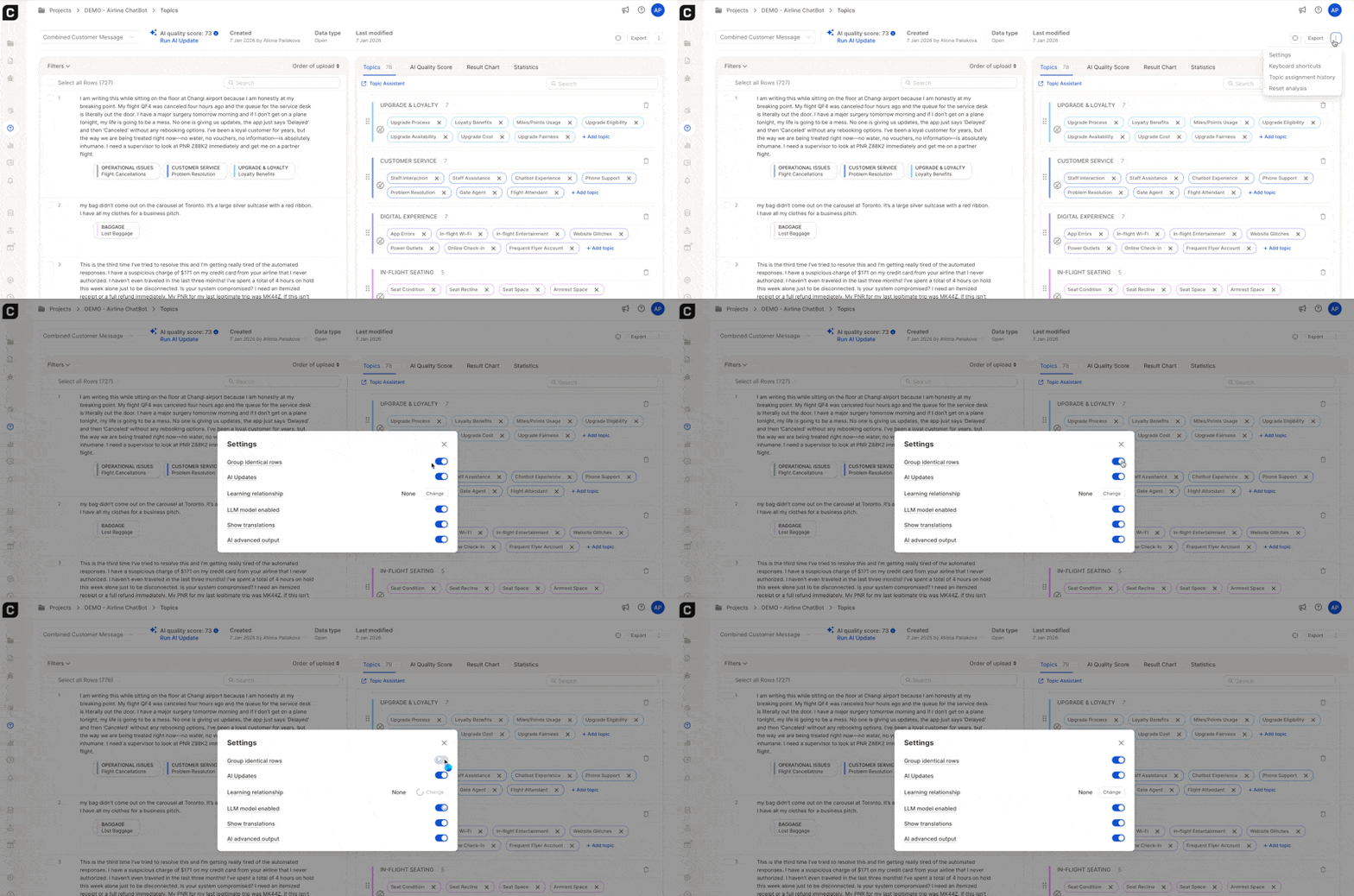
What it does
When enabled, responses with identical text (ignoring capitalization) are shown only once in the list. Topics are still applied to every occurrence behind the scenes, you just see a tidier view. This setting only affects what you see on screen; it has no impact on your data or results.\

Example: If 20 respondents all wrote “Great”, you’ll see it appear once in the list. All 20 responses are still counted in statistics and included in exports.
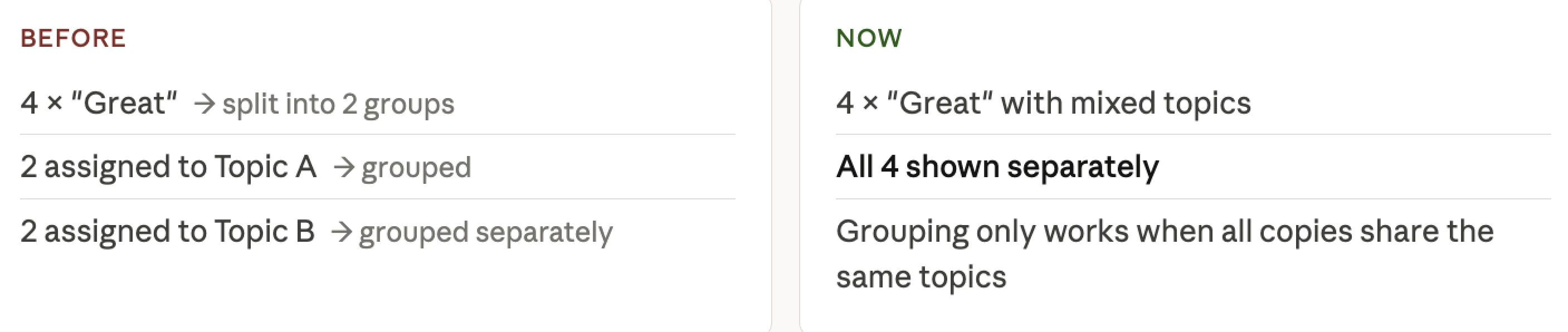
What changed in duplicate grouping
The grouping behaviour was recently updated to be more consistent. As a result, responses that previously appeared grouped may now show separately if their topic assignments differ.