

Once your data is analyzed, the Reports section helps bring your insights to life through dynamic, easy-to-read visualizations. Whether you’re monitoring customer satisfaction, identifying key trends, or preparing presentations, Caplena reports make storytelling with data simple and impactful.Documentation Index
Fetch the complete documentation index at: https://docs.caplena.com/llms.txt
Use this file to discover all available pages before exploring further.
What you can do with reports
- Visualize your data using charts, graphs, and summaries.
- Share compelling insights with your team or stakeholders.
- Track performance and feedback over time.
Step 1: Access the Reports section
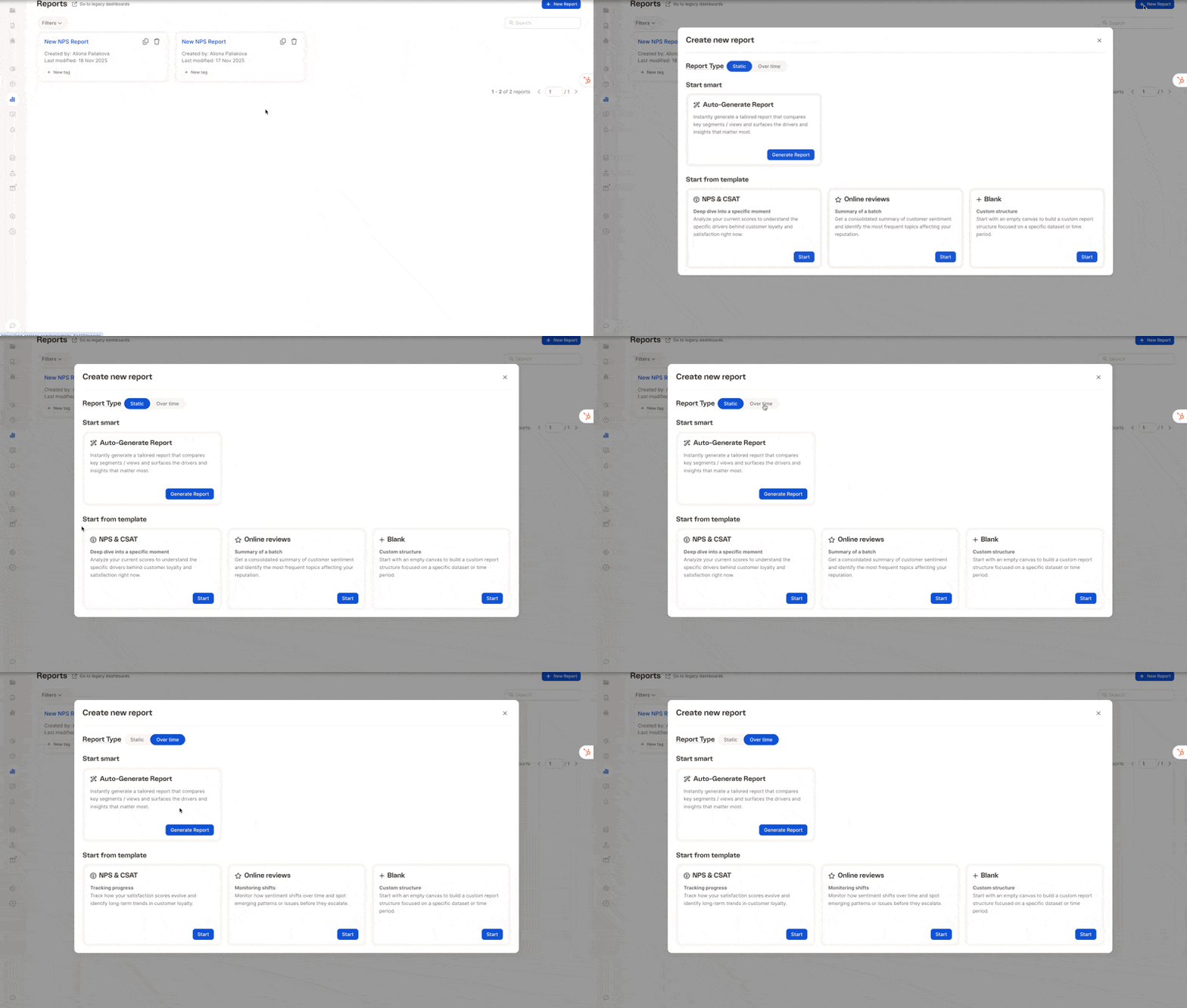
Step 2: Choose a report template
Caplena lets you choose between two report types at the top of the “Create new report” screen:- Static – A point-in-time report
- Over time – A report comparing results across periods (e.g., months, weeks)
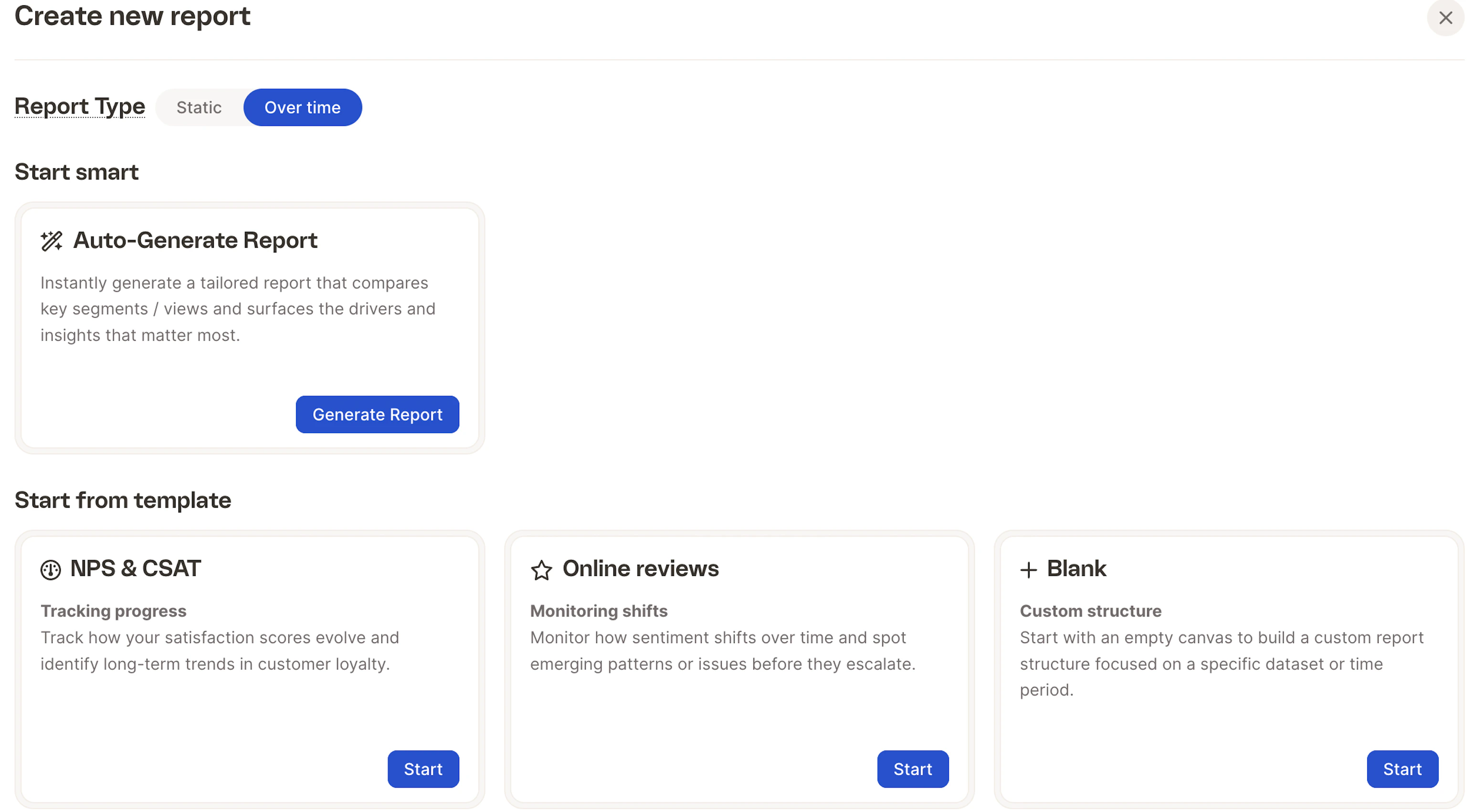
✨ Auto-Generate ReportGenerates a tailored report instantly based on your dataset. Caplena highlights key segments, meaningful differences, and the main drivers behind sentiment and experience. Click Generate Report to create it automatically.
| Template | Best For |
|---|---|
| NPS & CSAT | Tracking satisfaction over time and identifying long-term trends in loyalty. |
| Online Reviews | Monitoring shifts in sentiment and spotting emerging themes or issues. |
| Blank | Full flexibility — start with an empty structure and define everything yourself. |
Step 3: Configure your report
Let’s walk through the configuration using the NPS Over Time template as an example.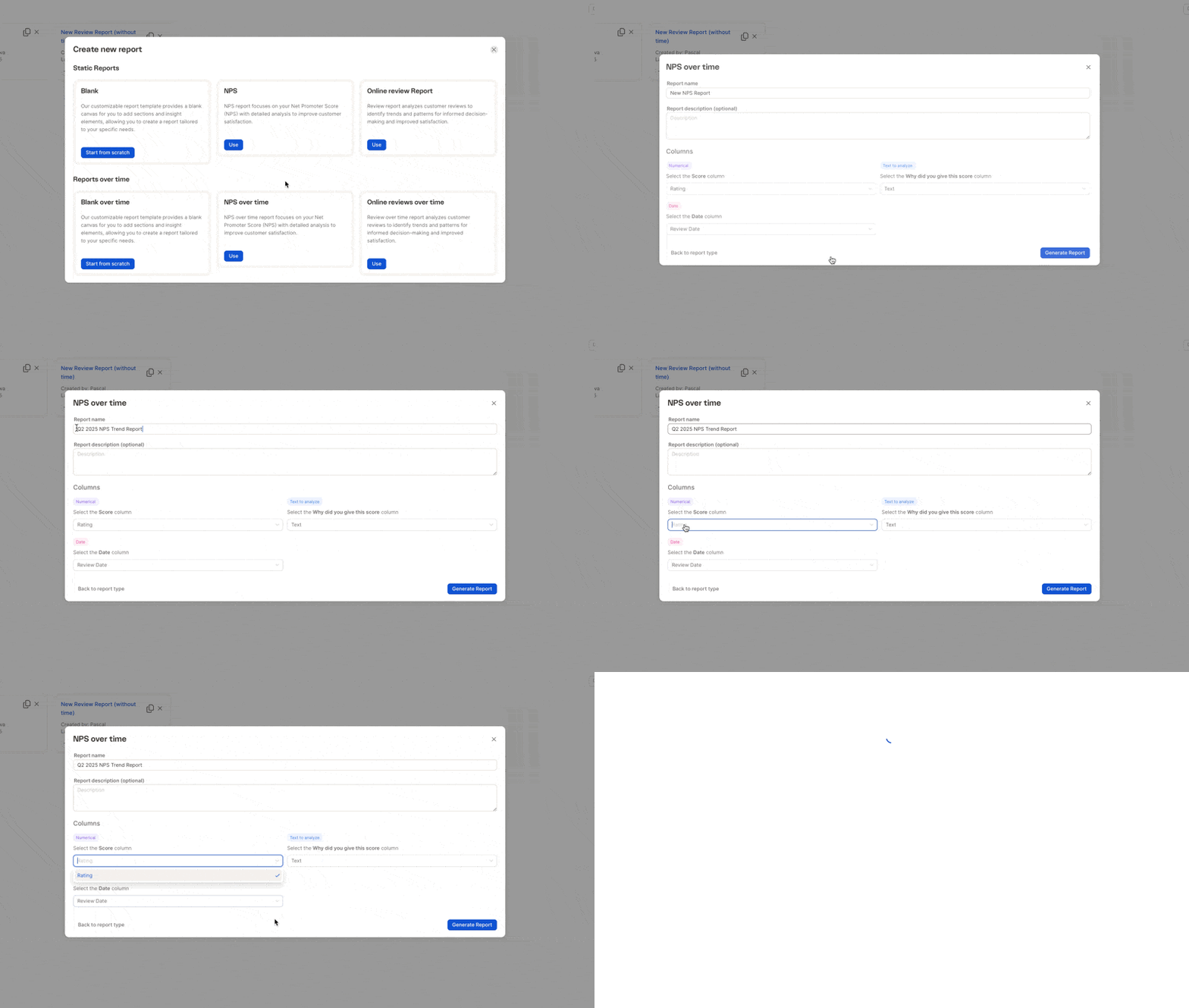
Basic info
- Report Name — e.g., Q2 2025 NPS Trend Report
- Description (optional) — brief goal or context, e.g., “Tracking NPS after April onboarding update”
Data columns
- Score — numeric field (e.g., NPS Score, Satisfaction Rating)
- Open-Text — explanation field (e.g., Why did you give this score?)
- Date (optional) — for time-based charts (e.g., Survey Completion Date)
Step 4: Generate and customize your report
Click Generate Report to instantly create your first draft. From there, you can:- Drag & drop visual elements.
- Apply filters by segments like country, product, or sentiment.
- Add titles and annotations to tell a clear story.